Choosing a worktop is one of the biggest decisions in any kitchen project. Quartz, granite and porcelain are three of the most popular surfaces in the UK, and each has clear strengths. Comparing quartz vs granite worktops is often the first step, with porcelain now a strong third option. As one of the specialist quartz suppliers UK fabricators and kitchen studios work with every day, we have compared all three side by side, so you can choose the surface that suits the way you live.
Quick answer
For most UK kitchens, quartz is the best all-rounder: durable, low-maintenance and available in a huge range of designs. Choose porcelain for outdoor kitchens, maximum heat resistance or a sleek modern look, and granite if you want a one-of-a-kind natural stone and do not mind occasional sealing.
| Quartz | Granite | Porcelain | |
| Material | Engineered stone (quartz + resin) | Natural stone | Fired clay and minerals |
| Looks | Consistent, wide design choice | Unique natural patterns | Printed designs, very consistent |
| Scratch resistance | Very good | Very good | Excellent |
| Heat resistance | Good, use trivets | Very good | Excellent |
| Stain resistance | Excellent, no sealing | Good, needs sealing | Excellent, no sealing |
| Outdoor use | Not recommended | Possible | Yes, UV stable |
| Usual thickness | 20mm or 30mm | 20mm or 30mm | 20mm |
| Maintenance | Very low | Medium | Very low |
| Best for | Busy family kitchens | Natural stone lovers | Outdoor and modern kitchens |
What are quartz, granite and porcelain worktops?
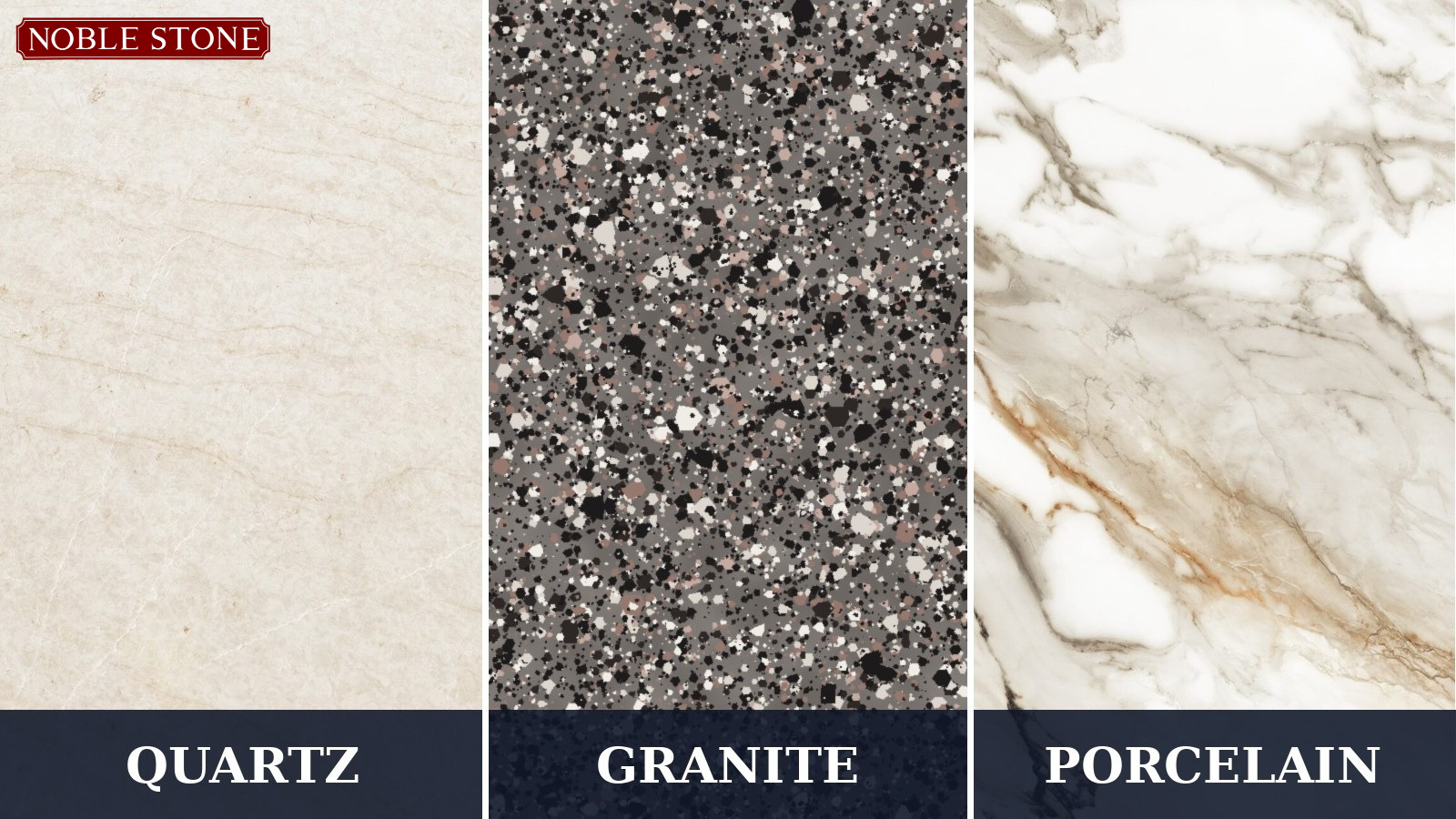
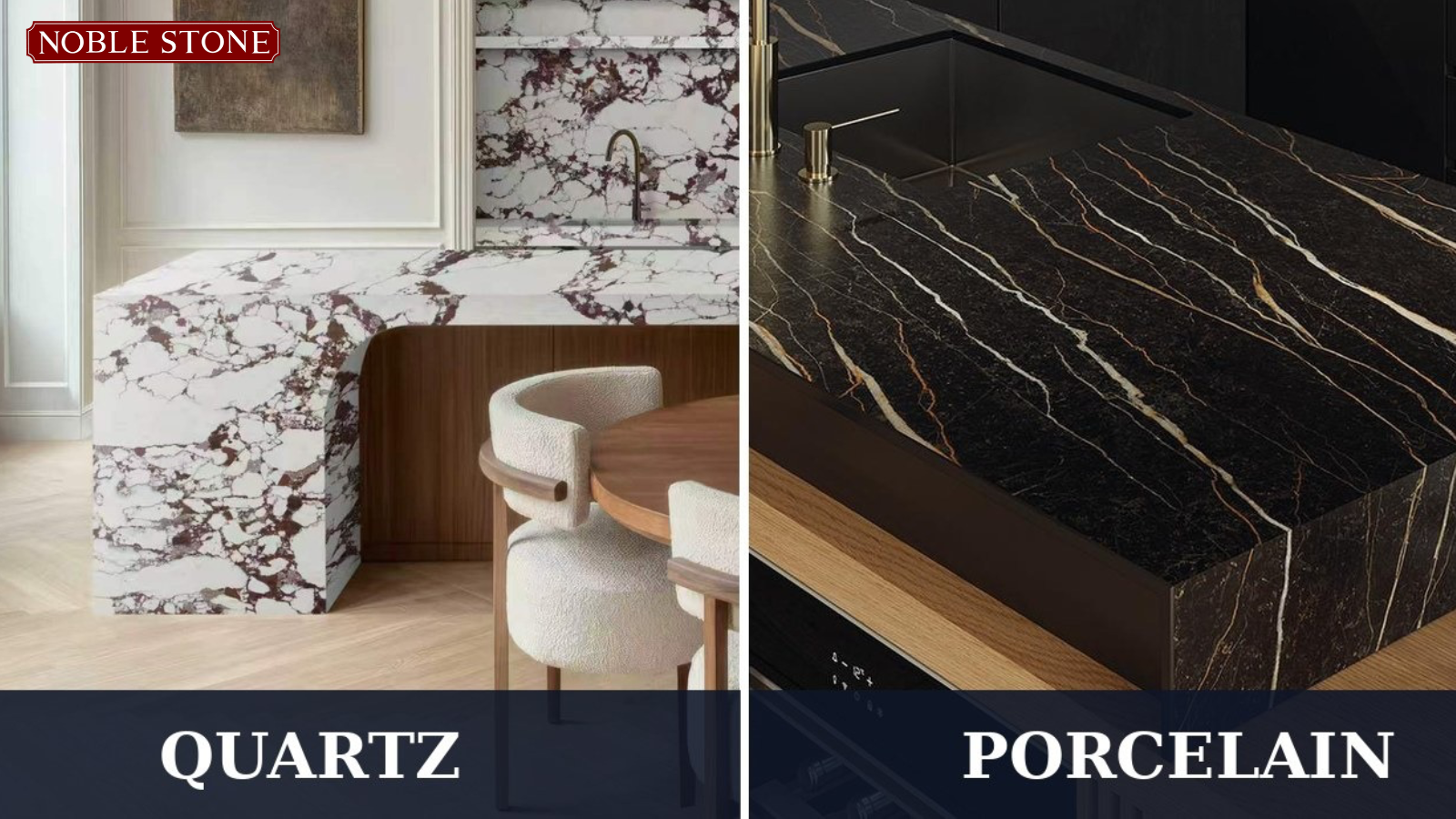
- Quartz worktops are engineered stone. Crushed natural quartz is bound with resins and pigments, then pressed into dense slabs. Because it is manufactured, quartz offers consistent colour and a very wide range of patterns, from plain whites to marble-inspired veining, as you can see across our quartz worktop colours.
- Granite is a natural igneous rock, quarried in large blocks and cut into slabs. No two slabs are the same, so every granite worktop has its own speckles, flecks and colour variation.
- Porcelain is made from fine clay and minerals, pressed and fired at very high temperatures. The result is a hard, almost non-porous surface. Its design is usually printed, so it can recreate marble, concrete, stone or metal effects, as you can see in our porcelain collection.
Which Is More Durable: Quartz, Granite or Porcelain?
All three are hard-wearing, but they handle heat and impact differently.
Quartz resists scratches and chips well in everyday use. Its resin content means hot pans, sudden temperature changes or prolonged heat can cause discolouration or cracking, so trivets are essential.
Granite is very hard and copes well with heat. It can chip at edges if struck hard, and it is not fully immune to thermal shock.
Porcelain is one of the most scratch- and heat-resistant worktop surfaces available. Its weak point is impact: edges and corners can chip if knocked with heavy pans.
Do Quartz, Granite and Porcelain Worktops Need Sealing?
Quartz and porcelain are both low-maintenance; granite needs a little more care. Quartz has very low water absorption, so wine, coffee and oil wipe away easily, and it does not normally need sealing. Porcelain is almost non-porous and needs no sealing at all. Granite, by contrast, is slightly porous, so most granite worktops need sealing periodically to stop liquids soaking in and staining.
For daily cleaning, warm water, mild detergent and a soft cloth work for all three. Avoid harsh chemicals and abrasive pads.
Quartz vs Granite vs Porcelain: Colours, Patterns and Design
Your choice here comes down to whether you want natural character or design control.
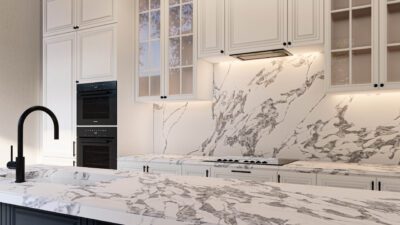
Quartz offers the widest choice: plain whites and greys, speckled designs and marble-look veining such as Arabescato Gold and Calacatta Gold Soft. Some slabs are bookmatched for mirrored veining, and 3D-printed quartz worktops such as Taj Mahal 3D add highly detailed marble effects. For bolder kitchens, designs like Rosso Levanto and Misterio Gold make a striking statement.
Granite gives genuine natural character. Every slab is unique, but the range is mostly speckled and flecked patterns rather than soft, flowing veins.
Porcelain can imitate almost anything, from marble to concrete, in large, consistent slabs. On many designs, the pattern is printed on the surface, so cut edges may look different from the face.
Which Is Cheaper: Quartz, Granite or Porcelain?
No material is always the cheapest: the design, thickness and fabrication work matter more than the material type. Quartz ranges from affordable plain designs to premium veined, bookmatched and 3D-printed quartz slabs; see our guide to quartz worktop prices for what affects the price. Granite overlaps heavily with quartz, with common granites offering good value and rare colours costing more. Porcelain slabs can be competitively priced, especially for large areas, although specialist fabrication can add to the final cost.
For all three, the final price also includes templating, cutting, edge profiles, cut-outs and installation by your fabricator.
Indoor, outdoor and other uses
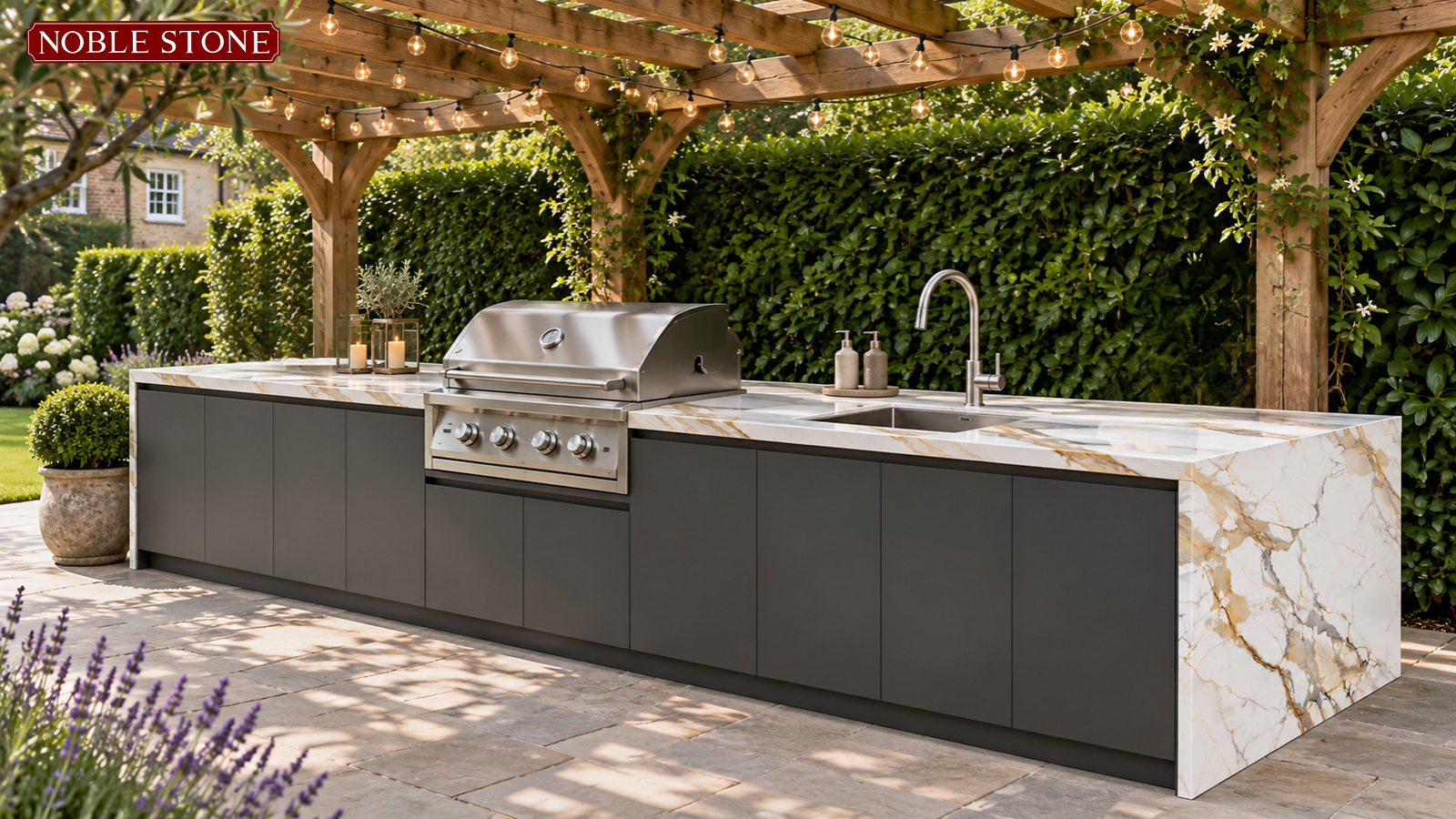
All three work well indoors, but only porcelain is a natural fit outside. Quartz suits kitchen worktops, islands, splashbacks and vanity tops, but it should stay indoors, as strong sunlight can fade or discolour the resin over time. Granite works indoors and can be used outdoors, though strong sun may affect some colours. Porcelain is UV stable and frost resistant, which makes it the best choice for outdoor kitchens, as well as for worktops, wall cladding and splashbacks indoors.
Environmental Impact
The most sustainable worktop is one you will not need to replace. Quartz is extremely durable and needs no sealants or special chemicals, just warm water and mild detergent, so a well-made quartz worktop can look good for decades. Because quartz is engineered, slabs are produced to consistent sizes, which helps fabricators plan cuts and reduce waste. When you compare suppliers, ask about where the slabs are made and how they are transported, as this makes a real difference to the overall footprint.
Which should you choose?
Match the material to how you live and cook.
- Choose quartz for a busy family kitchen, the widest design choice and almost no maintenance.
- Choose porcelain for an outdoor kitchen, a sleek modern look or the highest heat and scratch resistance.
- Choose granite if a unique natural stone matters most and you are happy to reseal it occasionally.
See Our Quartz in Person
NobleStone supplies quartz slabs to fabricators, kitchen studios and designers nationwide. We supply slabs only; templating, cutting and fitting are handled by your chosen fabricator.
Seeing the material in person helps most. Browse our quartz collection and order quartz samples to compare colour, finish and feel in your own kitchen light before you decide.
FAQ
- Is quartz or granite better for a kitchen worktop? For most kitchens, quartz is the more practical choice: it needs no sealing, resists stains well and comes in more designs. Granite is better if you want a natural, one-of-a-kind stone and good heat resistance.
- Are quartz worktops worth it? Yes, for most homeowners. Quartz is durable, hygienic and very low-maintenance, and it keeps its looks for many years with basic care.
- Is porcelain better than quartz? Porcelain is better for heat, UV and outdoor use. Quartz is better for impact resistance, thicker worktops and easier fabrication. The right choice depends on where and how the worktop will be used.
- Can you put hot pans on quartz, granite or porcelain? Porcelain and granite cope best with heat. On quartz, always use a trivet, as direct heat can damage the resin.
- Do granite worktops need sealing? Usually, yes. Most granite needs sealing periodically to resist stains. Quartz and porcelain do not need sealing.
- Are quartz and porcelain worktops easy to clean? Yes. Both are non-porous, so a soft cloth with warm water and mild detergent is enough for daily cleaning. Avoid bleach, abrasive pads and harsh chemicals.
- Which worktop is best for outdoor kitchens? Porcelain, as it is UV-stable and frost-resistant. Quartz is not recommended outdoors.